
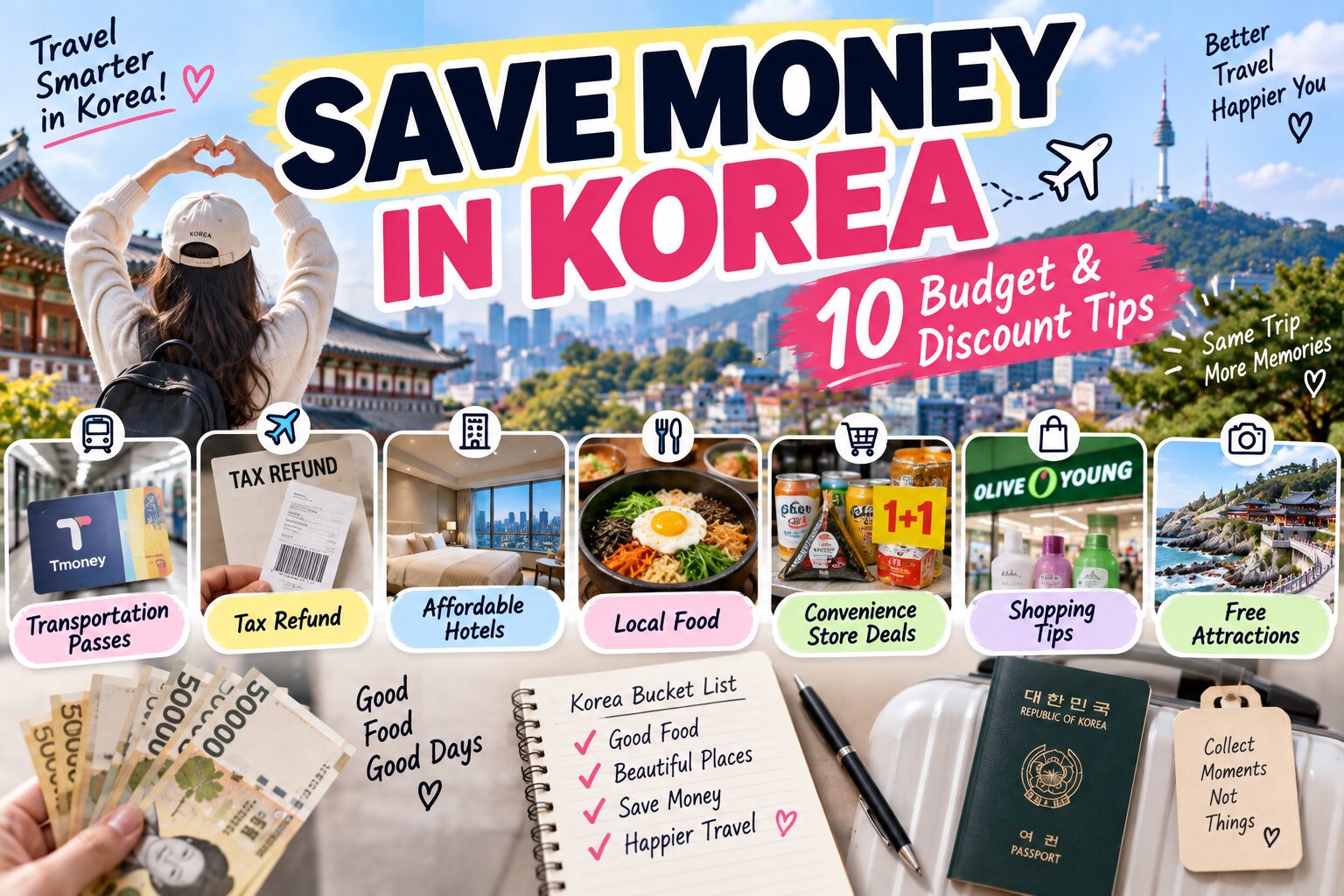
How to Save Money in Korea: 10 Travel Discount Tips
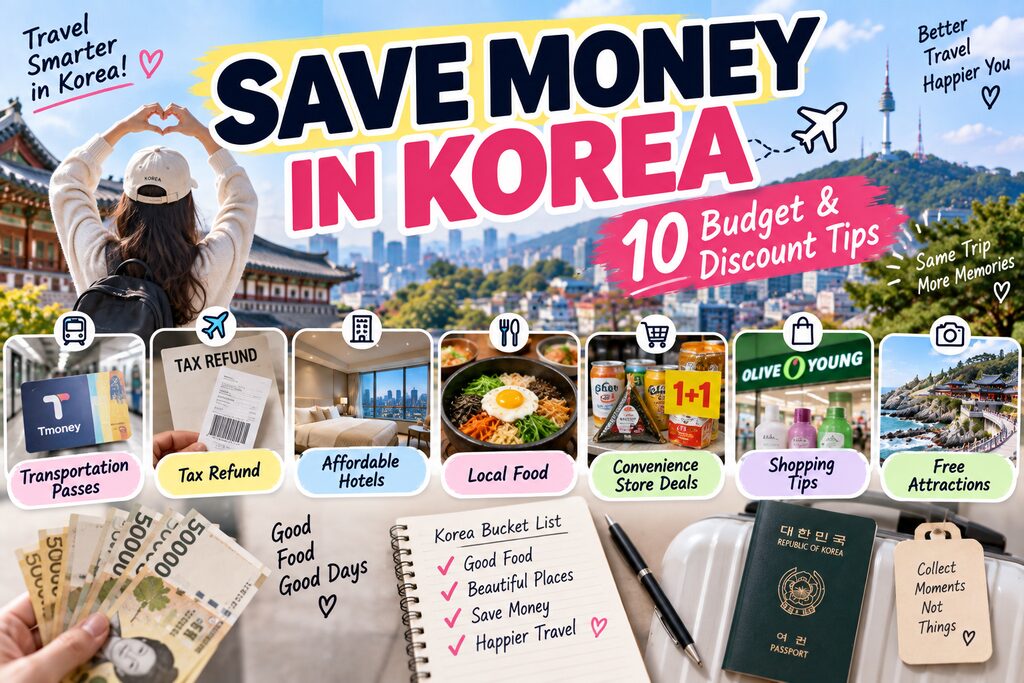
If you want to save money in Korea, you don’t necessarily have to travel like a backpacker.
Korea can become expensive surprisingly quickly once you add hotels, transportation, cafés, shopping and entrance fees. But there are also plenty of ways for international travelers to cut unnecessary costs.
As a Korean, these are the money-saving tips I’d recommend before spending your travel budget.
1. Use a Transportation Card Instead of Buying Tickets Every Time
Start with transportation.
T-money and other transportation cards can be used across much of Korea for subways and buses, and they also support transfer discounts between eligible services.
For most travelers, this is much easier than buying individual tickets.
If you’re mainly staying in Seoul and using public transportation heavily, there’s another option worth comparing.
2. Check the Climate Card Short-Term Pass
Seoul offers short-term Climate Card passes specifically useful for visitors.
Current prices are:
1 day — ₩5,000
2 days — ₩8,000
3 days — ₩10,000
5 days — ₩15,000
7 days — ₩20,000
These provide unlimited rides on eligible Seoul subway and bus services during the validity period. The tourist short-term passes are continuing even after the 2026 changes to Seoul’s longer-term Climate Card system.
If you’re taking public transportation several times every day, compare the pass price with normal T-money fares.
Don’t automatically buy one—the cheaper option depends on your itinerary.
3. Don’t Forget Korea’s Tax Refund
This is one of the easiest ways for foreign visitors to save money in Korea while shopping.
Eligible international visitors can receive tax refunds on qualifying purchases at participating stores.
The minimum qualifying purchase is currently ₩15,000, and eligible goods generally need to remain unused while you’re in Korea. Travelers must also meet the applicable stay and departure requirements.
Look for signs such as:
Tax Free
or
Tax Refund
Some stores can process an immediate refund, while other purchases may require processing later.
Keep your passport available when shopping because it may be required.
4. Compare Hotels by Subway Station, Not Just Neighborhood
Don’t automatically pay more to stay directly in Myeongdong or Gangnam.
Seoul’s subway system makes it possible to stay one or two stations away from the most expensive tourist areas and still reach them quickly.
For example, instead of asking:
What’s the cheapest hotel in Myeongdong?
Try asking:
Which subway stations give me easy access to Myeongdong?
That small change can dramatically increase your accommodation options.
However, don’t choose a hotel an hour away just to save a small amount.
Saving ₩10,000 while wasting two hours every day isn’t really saving money.
5. Eat Where Koreans Eat Lunch
You don’t need convenience-store food for every meal to travel cheaply.
Look for everyday Korean restaurants serving dishes such as:
Gimbap
Kalguksu
Gukbap
Jjigae
Bibimbap
Korean noodles
Restaurants around office districts and universities can be particularly useful when you’re looking for everyday meals rather than tourist-oriented dining.
One expensive Korean barbecue dinner is fine.
Three expensive tourist-area meals every day will destroy your budget much faster.
6. Use Convenience Stores Strategically
Korean convenience stores are great for saving money—but don’t turn every visit into a shopping spree.
They’re particularly useful for breakfast, drinks, snacks and simple late-night meals.
Look for promotions such as:
1+1 — Buy one, get one free
2+1 — Buy two, get one free
These promotions are extremely common across Korean convenience stores.
If you’re traveling with someone, they’re even easier to take advantage of because you can split the products.
7. Compare Prices Before Buying K-Beauty
Olive Young is incredibly convenient, but don’t assume you need to buy every product immediately.
Promotions, bundles and special sets can make the effective price very different.
If you’re staying several days, take a photo of the product and price and compare it before purchasing.
The same applies to Daiso.
For simple beauty accessories, travel containers, pouches and other small items, checking Daiso before buying a more expensive alternative can save quite a bit across an entire trip.
8. Use Free Attractions
Some of the best experiences in Seoul cost nothing.
You can build entire parts of your itinerary around neighborhoods, parks, markets, riverside walks and viewpoints without paying an admission fee every few hours.
Think:
Hongdae
Seongsu
Ikseon-dong
Cheonggyecheon
Han River parks
Traditional markets
You can then spend your budget on the experiences that actually matter to you—food, shopping, concerts or attractions—rather than paying simply to stay busy.
9. Check Tourist Discounts Before Booking
International visitors occasionally get access to promotions that locals don’t.
And this is exactly why checking current offers shortly before your trip is worth doing.
For example, a Korea Tourism Organization promotion running through November 30, 2026 currently offers international travelers up to 50% off participating tourist taxi and city-tour-bus services booked through participating platforms. Availability and maximum discount conditions apply, and the promotion can end early.
Don’t build your entire itinerary around a temporary promotion.
But always check for one before paying full price.
10. Don’t Exchange All Your Money at the Airport
You probably don’t need to convert your entire travel budget into Korean won immediately after landing.
Keep enough cash for situations where you actually need it and use a suitable international card for other purchases.
If you’re exchanging a larger amount of cash, compare exchange rates and fees rather than assuming the first airport counter will offer the best deal.
Also remember that saving 1% on exchange rates means very little if your own bank then charges a large foreign transaction or ATM fee.
Check your card’s overseas fees before leaving home.
Bonus: Group Your Itinerary by Area
This one doesn’t look like a discount, but it can save both money and time.
Don’t do:
Myeongdong → Seongsu → Hongdae → Gangnam → Myeongdong
in one day unless there’s a reason.
Instead, group nearby attractions.
For example:
Myeongdong + Namdaemun + Namsan
Hongdae + Yeonnam-dong
Seongsu + Seoul Forest
Gyeongbokgung + Bukchon + Insadong
You’ll spend less time moving around and more time actually traveling.
And fewer unnecessary trips mean fewer transportation costs.
How Much Money Can You Save?
There’s no magic percentage because everyone’s travel style is different.
The goal isn’t to make every part of your trip as cheap as possible.
A better strategy is:
Save on transportation
Save on ordinary meals
Claim eligible tax refunds
Use free attractions
Compare accommodation locations
Then spend more on the experiences you actually came to Korea for.
That’s how I’d personally approach Korea budget travel.
Final Thoughts
The easiest way to save money in Korea isn’t by cutting everything from your trip.
It’s about knowing which things aren’t worth paying extra for.
Use public transportation, compare short-term passes, claim eligible tax refunds, eat at everyday Korean restaurants, check shopping promotions and build your itinerary around nearby neighborhoods.
Save money on the boring parts.
Then use that money for the Korean food, shopping and experiences you’ll actually remember.